
China and Pakistan concluded their strategic dialogue, reiterating their opposition to unilateral actions in South Asia and discussing Kashmir, Afghanistan, and trilateral cooperation.

Pakistan has intensified its efforts to bring the US and Iran back to the negotiating table to end the war in West Asia, following President Trump's extension of the ceasefire. Pakistani officials have engaged with Iranian, Turkish, and British counterparts to promote dialogue and diplomacy for a peaceful resolution.

The United States and Iran could resume negotiations as early as next week in Islamabad, according to a report by The Wall Street Journal citing people familiar with the matter.

US President Donald Trump threatened to bomb Iran if a deal is not reached before the ceasefire ends, while Pakistan urged both sides to extend the truce and pursue diplomacy.

Amidst the stalling of high-level peace talks between Tehran and Washington, Iran continues to endure severe digital isolation as the nationwide internet blackout reached its 44th day on Sunday.

Pakistani Prime Minister Shehbaz Sharif has briefed Saudi Crown Prince Mohammad bin Salman on Pakistan's diplomatic efforts to de-escalate the situation in West Asia. This follows Pakistan's offer to host talks between the US and Iran to resolve the ongoing conflict.

'TTP has vowed to take revenge for the attacks that Pakistan is carrying out against Afghanistan.' 'To diminish this threat, Pakistan is hitting Afghanistan hard.'

If you are willing to spare four hours of your day on a spy action thriller, Dhurandhar The Revenge will surprise, shock and overwhelm you with its nervous energy, notes Divya Nair.
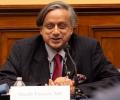
Tharoor said if Pakistan were to dismantle the infrastructure of terrorism, "we can talk to them".
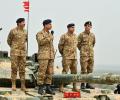
'Can a nuclear-armed nation sustain itself indefinitely under overt military rule without catastrophic consequences for itself and the region? History suggests otherwise.'

Top military officials from India and Pakistan highlighted their views at the Shangri-La Dialogue in Singapore, billed as Asia's premier defence forum, amid heightened tensions between the two sides following last month's military confrontation.

US Secretary of State Hillary Clinton and Pakistani Foreign Minister Shah Mahmood Qureshi would co-chair the first US-Pak Strategic Dialogue to be held in Washington on March 24.
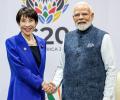
If they act now, they can reshape the strategic map of Asia without firing a shot. If they wait, the next opportunity will come only after a serious Taiwan Strait incident -- by which time the price will be far higher, and the room for boldness far smaller -- the opportunity may well be lost by then. The question is no longer whether this can or should be done, points out Varun Arya.

'The background for the Saudi-Pakistan agreement is the fact that the regional security order has collapsed due to the Israeli attack on Doha.' 'The Americans have largely abandoned their security guarantee for West Asia and the region has no choice but to look at alternatives.'
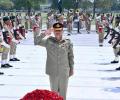
Creating a powerful new chief of defence forces has split the Pakistan military into four competing factions, points out Rana Banerji, who headed the Pakistan desk at RA&W.
Pakistan's deputy Prime Minister and Foreign Minister Ishaq Dar, who is in China on a four-day visit, and Chinese Foreign Minister Wang Yi co-chaired the fifth round of the foreign minister-level China-Pakistan Strategic Dialogue.
The United States has made it clear that its first strategic dialogue with Pakistan next week is not being held at India's expense, even as it said it is 'pleased' that Pakistan army chief Ashfaq Parvez Kayani is part of Islamabad's delegation as there can be no such talks without the military participation.
Shuja Nawaz, arguably the most authoritative expert on the Pakistani military, assesses the US-Pakistan strategic dialogue.
The United States and Pakistan would hold their third ministerial-level Strategic Dialogue in Washington, DC, next week, against the backdrop of America pushing Islamabad to act firmly against terrorist safe havens and step up relief efforts in the wake of the devastating floods in the country

The post further read that "at a moment of heightened regional turbulence", President Trump "demonstrated great strategic foresight and stellar statesmanship through robust diplomatic engagement with both Islamabad and New Delhi," Dawn reported.
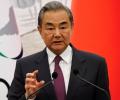
China on Tuesday called for a 'comprehensive and lasting ceasefire' between India and Pakistan, urging both countries to properly handle their differences through dialogue.
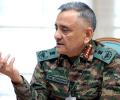
Chief of Defence Staff General Anil Chauhan on Saturday said India's Operation Sindoor has drawn a 'new red line' of intolerance against terror, and expressed hope that the military action has brought 'some lessons for our adversary also'.
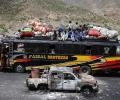
'No military offensive by Pakistan will end the insurgency in Balochistan without simultaneous, concerted efforts toward political dialogue to de-escalate tensions.'

In a statement after a meeting between Trump and Pakistan Army chief Asim Munir at the White House on Wednesday, the Inter-Services Public Relations -- the media wing of the Pakistan Army -- said they also discussed joint counterterrorism efforts.
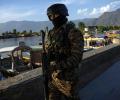
The 'mediation' by the United States from behind the scene on the diplomatic track appears to be once again working, which calls on both Delhi and Islamabad to show restraint and pull back from a military confrontation, notes Ambassador M K Bhadrakumar.
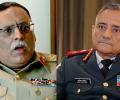
In the wake of the recent hostilities, both sides have moved from weapons to words, with India dispatching several delegations to visit more than 30 capitals across the world. A similar effort by Pakistan is set to start on Jun 2.
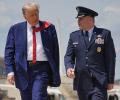
He then went on to say that, however, he won't get a Nobel Peace Prize for any of his efforts.
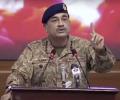
Asim Munir and his brand of short-sighted army officers give no inkling of paying heed, changing course or learning lessons from the past, observes Rana Banerji, who headed the Pakistan desk at RA&W.
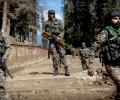
China hopes both sides will remain restrained, move toward each other, and work together to de-escalate the situation.
The 'trust deficit' between the United States and Pakistan has seemingly evaporated after the strategic dialogue between Washington and Islamabad in March, that also featured Army chief General Ashfaq Kayani and Inter Services Intelligence director general Shujat Ahmad Pasha.If the remarks of Daniel Benjamin, the State Department's coordinator for counter-terrorism are anything to go by, the US no longer is suspicious of Pakistan playing a double game.
A trust deficit still haunts Pakistan's ties with the United States, which is not entirely convinced of this country's commitment to the war on terror, the Pakistani media said on Thursday, seeking sustained efforts to build on bilateral strategic dialogue to achieve goals like getting a civil nuclear deal.Most Pakistani dailies described Wednesday's upgraded US-Pak strategic dialogue as the start of a new phase in bilateral relations.
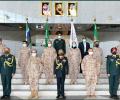
'The attacks made clear to all the Gulf States that Pakistan was the nursery and sanctuary of extremist violence and that this violence threatened all the countries in the region.'
Notwithstanding India's protests, the Obama administration is readying itself to provide Pakistan with even more massive doses of military largesse, as senior United States officials acknowledged that Pakistan's request for additional security assistance would be a top priority on the agenda of the US-Pakistan Strategic Dialogue that begins on Wednesday.

All-party parliamentary delegations on Monday met with the leaders of several countries and highlighted India's resolve to combat terrorism, which they stressed must be eradicated in the interests of all humanity.

India stressed that it is even more extraordinary for a country with a history of rigged elections to talk about political choices, that too in a democracy.

He also said that his country would continue to talk about the Kashmir issue "through channels that are acceptable" and prayed that "the issue is amicably resolved".
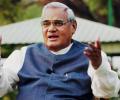
It was good fortune for India to have Atal Bihari Vajpayee lead the government at a crucial moment in our history. He avoided India meeting the fate of Iraq or Ukraine, asserts military historian Colonel Anil A Athale (retd).

Secretary of State Hillary Clinton on told the Pakistani leadership that the United States wants the continuation of dialogue between New Delhi and Islamabad so that the two sides can resolve their outstanding problems amicably, diplomatic sources said on Monday.
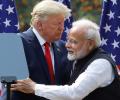
'Trump will absolutely back New Delhi on its position that Pakistan must do more to crack down on terrorists that threaten India.'

Cameron will focus on education, trade and national security in his discussions with the Pakistani leaders.
